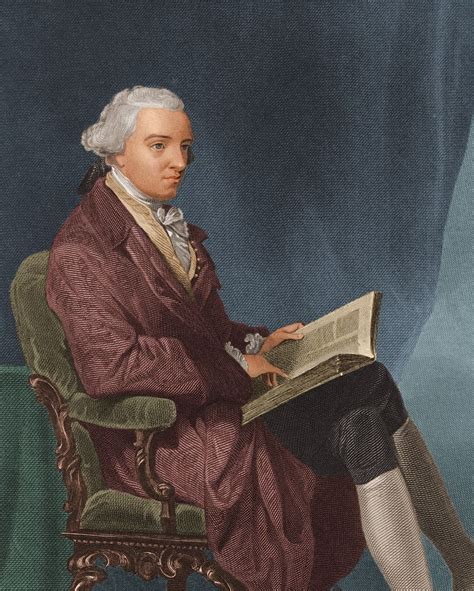
By Den Ardinger 32° KCCH
John Hancock (1737–1793) was one of the most prominent figures of the American Revolution, remembered for his bold signature on the Declaration of Independence and his leadership in the Patriot cause. Born on January 23, 1737, in Braintree (now Quincy), Massachusetts, Hancock came from a modest but respectable family. His father, John Hancock Sr., was a clergyman, and his mother, Mary Hawke Thaxter, came from a family with roots in the region. After his father’s death in 1744, when John was just seven years old, he was adopted by his wealthy uncle, Thomas Hancock, one of the richest merchants in New England.
Thomas Hancock played a crucial role in shaping his nephew’s future. He ensured John received an excellent education, sending him to Harvard College, from which he graduated in 1754 at the age of 17. After completing his studies, Hancock entered his uncle’s mercantile business, gaining experience in trade and finance. When Thomas Hancock died in 1764, John inherited a vast fortune and a thriving commercial enterprise, instantly making him one of the wealthiest men in the American colonies.
Hancock’s wealth and status brought him into the political sphere during a time of increasing tension between Great Britain and its colonies. He became an outspoken critic of British taxation policies, particularly the Stamp Act of 1765 and the unpopular Townshend Acts of 1767. His opposition was not merely rhetorical; in 1768, British officials seized his ship, the Liberty, on charges of smuggling. This incident inflamed colonial resentment and elevated Hancock as a symbol of resistance to British authority.
By the early 1770s, Hancock was deeply involved in revolutionary politics and took part in the Boston Tea Party in 1773. He served in the Massachusetts legislature and became a leading figure in the Patriot movement alongside men such as Samuel Adams. In 1774, he was elected president of the Massachusetts Provincial Congress, effectively making him the chief political leader of Massachusetts. The following year, Hancock and Adams were specifically targeted by British authorities, leading to the famous events preceding the battles of Lexington and Concord.
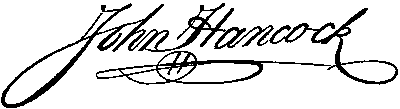
In 1775, Hancock was chosen as president of the Second Continental Congress, a position he held during some of the most critical years of the Revolution. As president, he presided over debates that ultimately led to independence. On July 4, 1776, Hancock became the first to sign the Declaration of Independence. His signature was notably large and flamboyant, giving rise to the enduring expression that someone should “put their John Hancock” on a document.
Hancock married Dorothy Quincy Hancock on August 23, 1775 in Fairfield, Connecticut. Dorothy, often called “Dolly,” came from a prominent Massachusetts family and was known for her intelligence and strong character. The couple had two children, both of whom tragically died young—Lydia Henchman Hancock died in infancy, and John George Washington Hancock passed away as a child. These personal losses were a source of deep sorrow for Hancock and his wife.
Hancock’s connection to Freemasonry is an important aspect of his life, reflecting his engagement with influential social networks of the time. He was a member of St. Andrew’s Lodge in Boston which was established in 1756. It was one of the most prominent Masonic lodges in colonial America. Freemasonry in the 18th century often attracted leaders committed to Enlightenment ideals such as liberty, equality, and fraternity—principles that aligned closely with Hancock’s personal philosophy. While Hancock was not as prominently associated with Masonic leadership as some of his contemporaries, his membership indicates his participation in these intellectual and social circles that helped shape revolutionary thought.
After independence, Hancock continued to play a significant role in public life. He was elected the first governor of Massachusetts under its new constitution in 1780 and served multiple terms, though his tenure was occasionally interrupted by health issues and political disagreements. He also presided over the Massachusetts convention that ratified the United States Constitution in 1788, helping secure its approval in a critical state.
John Hancock died of natural causes on October 8, 1793, in Boston, Massachusetts at the age of 56. He was widely mourned, and his funeral was one of the largest public ceremonies of its time. He is buried in Granary Burial Ground in Boston, Massachusetts. Today, Hancock is remembered not only for his iconic signature but also for his leadership, wealth-backed support of the revolutionary cause, and enduring commitment to American independence.
John Hancock, more than a man, a Mason.

