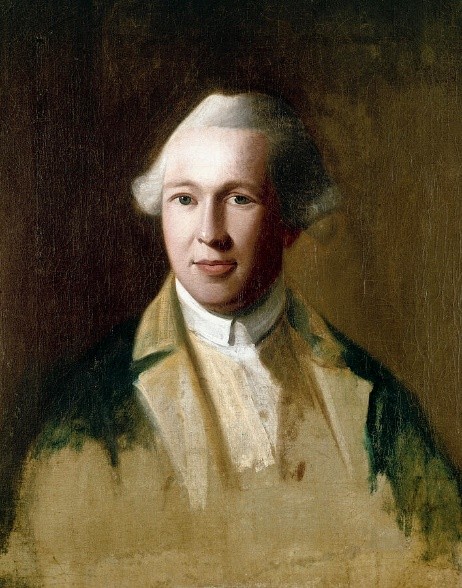
By Den Ardinger 32° KCCH
Joseph Warren was born on June 11, 1741, in Roxbury, Massachusetts, a farming community just south of Boston. He was the eldest child of Joseph Warren Sr. and his wife, Mary Stevens Warren, a hardworking couple in the rural Massachusetts colony. His father was a well-respected farmer whose orchards produced fruits and apples that were especially prized in the region. Tragically, when young Joseph was about 14 years old, his father died in a farming accident after falling from a ladder while gathering fruit in the family orchard. The loss was sudden and placed strain on the family. Warren’s parents had set the stage for his intellectual and moral development, and his mother ensured that his education continued despite financial hardship after his father’s death.
Raised in a Congregationalist environment shaped by the New England Puritan tradition, Warren attended the Roxbury Latin School, where his intellectual promise became apparent. At the age of fourteen he enrolled at Harvard College, graduating in 1759 with honors. After graduation, he briefly taught at Roxbury Latin before studying medicine in Boston. He apprenticed under Dr. James Lloyd, one of the city’s most respected physicians, a relationship that connected him with Boston’s elite and expanded his social network.
Warren quickly established a reputation as a skilled physician and surgeon in Boston. During a major smallpox epidemic in the 1760s, he operated inoculation clinics and helped care for the sick—even inoculating figures like John Adams—earning respect across social classes. His medical practice brought him into contact with many of Boston’s political leaders and future Revolutionaries.
In 1764, Warren married Elizabeth Hooten, an heiress from a prominent New England family. The couple had four children, though Elizabeth died young in 1772 (some sources say 1773), leaving Warren to raise the children alone while deeply involved in the rising colonial crisis with Britain. Warren was later engaged to Mercy Scollay, a noted Patriot supporter, but he died before they could marry.
The mid-1760s saw Britain’s increasing imposition of taxes and controls on the American colonies, beginning with the Stamp Act and later the Townshend Acts. These measures alarmed Warren and propelled him into political activism. He wrote a series of forceful pamphlets under the pseudonym “A True Patriot,” condemning British policies, and became a prominent member of the Sons of Liberty. His strong writings in the Boston Gazette and his oratory after incidents like the Boston Massacre galvanized colonial resistance.
Warren collaborated closely with leaders such as Samuel Adams and John Hancock, and was a signer of resolutions and committees pushing for colonial rights. In 1774, he helped draft the Suffolk Resolves, a key protest against the Coercive Acts. When the Massachusetts Provincial Congress was formed, Warren was chosen president of its third session. His leadership elevated him to one of the most influential Patriot voices in New England.
In April 1775, sensing the imminent clash between colonial militias and British forces, Warren dispatched Paul Revere and William Dawes on their famous rides to warn the countryside that British troops were marching to seize arms at Lexington and Concord. Although Warren declined a formal military command at first, he remained deeply involved in organizing militia forces.
On June 14, 1775, the Provincial Congress appointed Warren a Major General in the Continental Army. Three days later, at the Battle of Bunker Hill (Breed’s Hill), he chose to fight with the militia on the front lines rather than remain in his high rank. There he was killed on June 17, 1775, becoming an early martyr of the American Revolution. His death was lamented by both friends and foes. British General Thomas Gage reportedly remarked that losing Warren was equivalent to losing 500 men.
Warren’s involvement in Freemasonry deeply influenced his social and political networks. Around 1761, while building his medical career, he joined St. Andrew’s Lodge No. 81 in Boston, which operated under the authority of the Grand Lodge of Scotland. This affiliation connected him with key figures like Paul Revere, who served as lodge secretary, and strengthened bonds among New England’s Patriot leaders.
Warren’s leadership in Masonry grew quickly. He served as Worshipful Master of his lodge and by 1769 was chosen Grand Master of Masons in Boston. In 1772, he was appointed Grand Master over all Scottish Masonry in North America, giving him significant influence among lodges operating under that authority. Freemasonry’s emphasis on fraternity, liberty, and mutual support resonated with the Enlightenment values that underpinned colonial resistance to British rule.
Through Masonry, Warren built enduring relationships that helped shape revolutionary strategy, and communication networks. These bonds with Revere, Hancock, and others were both social and strategic, contributing to the cohesion of Patriot leadership in the tumultuous years before open warfare.
Warren was killed at the Battle of Bunker Hill at the age of 34 on June 17, 1775. He was quickly buried in an unmarked grave by the British, but the body was exhumed and reburied with honors at Granary Burial Ground in Boston by the Americans in April 1776 after being identified by Dr. Paul Revere who had made his dental bridge.
Warren’s legacy extended through later generations, with descendants remembering him as a figure of courage and patriotic sacrifice. He is memorialized in place names and in patriotic societies throughout the United States. Fourteen states have counties named after him and there is a school, a fort, streets and numerous statues.
General Joseph Warren, more than a man, a Mason.
 Valley of Orlando eNews